
The Recognition Gap
The Recognition Gap

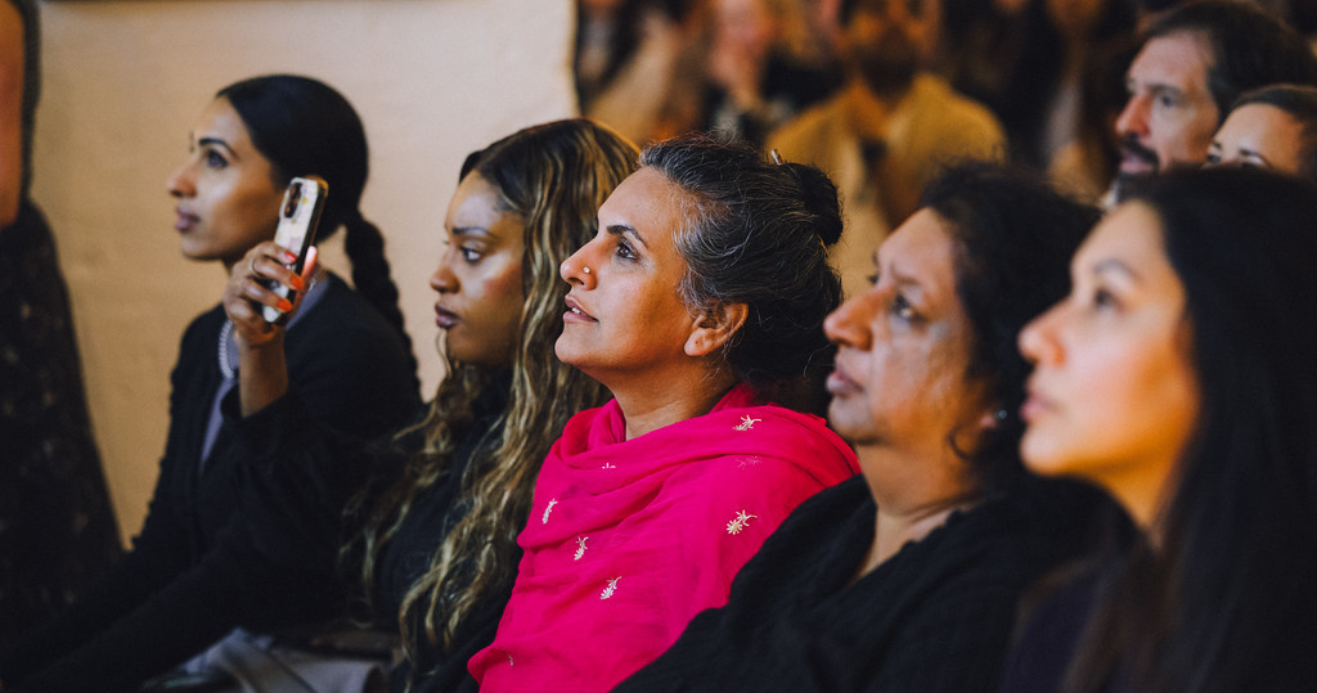
About the Campaign
The Recognition Gap campaign brings together People Like Us and Women in PR to spotlight the intersection of gender and ethnicity – and the unique barriers faced by women of colour and other marginalised women at work. By uniting our communities, we are shining a light on those too often overlooked, under-supported and undervalued across the workforce.
At the heart of the campaign is one clear issue: recognition. From ideas being dismissed in meetings to missed opportunities for progression, marginalised women are disproportionately affected by systems that fail to see, value and reward their contributions. The result is not only stalled careers, but a widening gap in confidence, pay and progression.
But this campaign is not just about highlighting the problem. It’s about action.
Through The Recognition Gap Pledge, we are calling on employers, leaders and allies to recognise more – to be intentional about who is represented in teams and meetings, who is heard, who is supported, and who is progressing.
Alongside this, we are sharing practical, tangible actions for employers and businesses, for individuals as allies and for women of colour – from amplifying ideas in meetings to opening up networks and opportunities. Many of these actions come directly from the women experiencing these barriers and also draw on decades of collective experience of those supporting professionals.
Closing the Recognition Gap requires collective responsibility. This campaign is a call to move beyond good intentions and take meaningful steps to build workplaces where women of colour are recognised – in talent, contribution and leadership potential – and supported to thrive.
Pledges For Businesses
8 ways employers can build better workplaces for women of colour
- Conduct intersectional pay and progression analysis
Women of colour are more likely than others to be overlooked for promotions or underpaid. Analysing promotion data by both gender and ethnicity – and both combined – helps identify systemic gaps early. Fixing inequities improves retention, boosts engagement, and ensures top talent isn’t leaving unnoticed. - Implement clear, transparent promotion and progression criteria
Nearly half of women of colour feel behind in their careers. Clearly defined, communicated promotion pathways – including criteria and salary bands – reduce ambiguity, help high-potential employees see a fair path forward, can help reduce promotion biases, and decrease the risk of disengagement or attrition. 41% of ethnic minority women say transparent progression would rebuild trust. - Provide equitable access to mentoring, coaching, and sponsorship
Women of colour often carry a “representation tax” and report being overlooked for career-enhancing opportunities. Structured mentoring and sponsorship programs ensure all employees receive guidance and advocacy, accelerating development, reducing frustration, and preparing the organisation’s future leaders. 17% of women of colour say mentors may have supported earlier progression, helping navigate unspoken industry rules and influential networks. - Embed inclusive performance and feedback processes
Research shows women of colour are more likely to receive unclear or unfair feedback. Standardising performance review criteria, training managers on bias, and regularly auditing outcomes ensures recognition is fair and merit-based. This protects the business against disengagement, reputational risk, and potential legal challenges. - Foster an inclusive culture where all voices are heard and people feel safe to speak up
Women of colour report ideas being ignored or dismissed until repeated by others. Train managers to encourage active contribution from all participants in meetings and decision-making. Create environments where concerns about pay, culture or progression can be raised safely. - Build genuinely diverse teams at all levels
Proactively identify underrepresented talent at all levels. Prioritise inclusive recruitment and diversify your talent pipeline. Develop and help progress ethnically diverse leaders – 30% say increasing visible diverse leadership would rebuild trust. - Invest in supportive managers
Train managers to recognise bias and actively support fair career development. - Make what’s implicit, explicit
Take time to show new starters the “unwritten rules” of your organisation. Don’t assume everyone knows how your organisation works. Make informal norms, expectations and ways of working clear to all.
Pledges for Allies - by Women in PR.
These actions are grounded in lived experiences, shaped by conversations with women of colour about the barriers they navigate in the workplace.
6 ways individuals can be better allies for women of colour in workplaces
- Train Your Ears
Women of colour often don’t feel safe to speak up or if they do can be talked over. Listen out to who is speaking and who is not to encourage active contribution from all participants in meetings and decision-making.
- Share opportunities
Be intentional about who you put forward. Recommend, invite and include women of colour in opportunities, projects and rooms they may not otherwise be considered for.
- Amplify Their Ideas
Women of colour report ideas being ignored or dismissed until repeated by others. Help ensure their contributions are credited and value the diverse lived experience they bring.
- Speak Up
Help call out racism, sexism, and other microaggressions when you witness them.
- Lend your network
Recognise your influence. Women of colour often find it harder to build networks or break into existing ones. Actively sponsor diverse talent by opening your network to advocate for overlooked talent. Say their name in rooms where opportunities are mentioned or decided.
- Do the work yourself
Don’t rely on colleagues to absorb the burden of educating you on race or inclusion. Take responsibility for learning, so the weight doesn’t fall on those already affected.
Top Tips For Women - Whitney Simon, DEI Lead, People Like Us
5 ways women can navigate (and challenge) the workplace
These tips are written for women navigating workplaces that were not always designed with them in mind. They are practical, but they are not the full picture. Sustainable progress works best when individuals and organisations move forward together, when women have strategies to advocate for themselves, and when the people and systems around them create the conditions for that advocacy to actually work.
- Track your impact and notice patterns
Keep a record of your work so you can advocate for yourself clearly. Also look for patterns, not just one-off moments. If your ideas are overlooked or your work is credited to others, that matters. These patterns often reflect broader biases, particularly for women of colour, disabled women, and working-class women, and are not simply about individual performance. - Build sponsorship and recognise how it works
Sponsors who advocate for you can make a real difference. Build relationships with people who value your work and keep them informed. At the same time, sponsorship often follows familiarity and bias. Who gets advocated for and who does not is often shaped by intersecting identities, not just merit. - Look at how decisions are actually made
Knowing promotion criteria is useful, but so is understanding how they are applied. Ask who is progressing and whether it is consistent across different groups. “Neutral” standards often favour particular norms around communication and leadership that do not work equally well across different cultural, class, or disability contexts. - Use collective approaches carefully
Raising issues together through networks or formal channels can be powerful. But risk is not shared equally. Those in less secure roles or from marginalised backgrounds often face higher stakes. An intersectional lens helps make these differences visible and can shape how collective action is taken on more fairly. - Protect your well-being and set boundaries
Support networks and rest are important. But not everything should be managed through personal resilience. Microaggressions, code-switching, and the pressure of representation are shaped by workplace culture. These pressures often accumulate most for women facing multiple forms of marginalisation, and require organisational, not just individual, responses.
THE RECOGNITION GAP: WOMEN OF COLOUR ARE BEING OVERLOOKED, UNDER-SUPPORTED AND LEFT BEHIND AT WORK - NEW RESEARCH REVEALS
New research shows ethnic minority women face the highest levels of exclusion, discrimination and stalled progression in UK workplaces
- Nearly three in ten (29%) ethnic minority women say their ideas have been ignored, dismissed or rejected until repeated by someone else
- One in five report microaggressions (20%), discrimination (20%) and being overlooked for stretch opportunities (21%)
- Almost half (47%) say they feel behind where they expected to be in their careers
- Ethnic minority women are also more likely to report self-silencing, unfair feedback, the mental load of representation and financial pressure harming their mental health
- The findings also point to clear solutions: transparent promotion criteria, supportive managers, visible senior leaders and pay transparency
London, embargoed until 00:01 25 March 2026: Women of colour are facing the sharpest workplace barriers in the UK, according to new research from non-profit People Like Us and Women in PR, with ethnic minority women more likely than any other group to report exclusion, discrimination, blocked progression and the mental strain of navigating unequal workplaces.
Everyday inequality at work
The research paints a stark picture of day-to-day workplace inequality. Nearly a third of ethnic minority women (29%) say their ideas have been ignored, dismissed or rejected until repeated by someone else – compared to 21% of white workers. Alarmingly, 79% of ethnic minority women have experienced issues in the workplace within the last 12 months, by contrast 63% of white women and 65% of white men said the same.
The highest levels of day-to-day exclusion
Ethnic minority women report the highest levels of workplace friction across a breadth of measures. One in five (20%) say they have experienced microaggressions at work, compared to 15% of white women and 11% of white men. The same number (20%) report discrimination at work – more than double the rate reported by white women (9%) and white men (9%).
A quarter (25%) say they have held back from raising concerns because they feared the consequences. A quarter (25%) say they have received unfair or unclear performance feedback. Nearly a quarter (23%) say they carry the ‘representation tax’ – the mental load of representation at work, compared to 16% of white women.
The wider political climate is also having an impact. Only 24% of ethnic minority women say political discussion, media coverage or online commentary around race, immigration or ‘anti-woke’ issues has had no impact on behaviour at work. By contrast, 48% of white women and 40% of white men say it’s had no impact.
Stalled careers, unequal pay and a growing confidence gap
The data suggests that workplace inequality is not only affecting how women of colour are treated day to day, but also how they progress and how they feel about their future. Over one in five ethnic minority women (21%) say they have been overlooked for stretch projects and career enhancing opportunities. Nearly half (47%) say they feel behind where they expected to be in their careers, compared to 41% of white women.
Pay is a major part of that picture. Around 18% of ethnic minority women say they have been paid less than peers in similar roles, whilst a large proportion (58%) say they have discovered a colleague from a different ethnic background was being paid more for similar work. Two thirds (67%) say financial pressure linked to low or stagnant pay has harmed their mental health.
The findings also reveal the personal risk many women of colour feel they take by speaking up. Nearly one in five (18%) say they did not challenge unequal pay because they feared repercussions or career damage, compared to 8.5% of white women. Yet when ethnic minority women surveyed challenged unequal pay, 15% say they challenge the issue and received a pay increase – suggesting that the problem is not only unequal pay itself, but the burden placed on individuals to fight for fairness.
There are wider pressures too. Over two in five ethnic minority women (42%) say family or community expectations have a major or moderate impact on their career satisfaction, compared to 29% of white women – underscoring how workplace inequality can collide with broader cultural pressures rather than exist separately from them. Socio-economic background also plays a role, with workers from lower socio-economic backgrounds more likely to disagree that their line manager actively advocates for their progression (26% vs 18%) and believe they are paid fairly for the work they do (34% vs 27%) compared to those from professional backgrounds.
Location and commuting barriers are emerging as another factor shaping career satisfaction. Around 44% of Gen Z and 40% of Millennials say it is a major or moderate issue, compared to 32% of Gen X and 20% of Boomers, with ethnic minority respondents also more likely than white respondents to report the same (41% vs 35%).
Women of colour are also telling employers what needs to change
The research also points to practical steps employers can take now. The single biggest change ethnic minority women surveyed say would rebuild trust is clear promotions criteria communicated to all staff (41%). They are also significantly more likely to say they want visible senior ethnically diverse leaders (30%), salary bands published in job adverts (26%), and voluntary ethnicity pay gap reporting (20%).
When asked what support they wish they had access to earlier in their careers, the top answers from ethnic minority women are
- Genuinely diverse teams (25%)
- A supportive line manager (17%)
- Transparent promotion criteria and processes (17%)
- A mentor or coach (17%)
- A sponsor – a senior person actively championing them (17%)
Sheeraz Gulsher, co-founder of People Like Us, commented: “The message is clear: women of colour are not asking employers for vague promises or performative statements. They are asking for fairer systems, better support and more transparency.
Employers must act, and Government ministers must publish the draft Equality (Race and Disability) Bill now, respond to the consultation, and bring in mandatory ethnicity pay gap reporting for large employers with action plans to tackle the gaps it exposes.”
Angela Balakrishnan, Vice President at Women in PR, said: “This research reflects what women of colour have long experienced – a Recognition Gap. Despite putting in the work, their contributions are too often overlooked, their progress stalled and their potential under-rewarded. This is not a question of confidence or capability, and it is not just a pipeline problem – it’s a systemic one.
“Businesses risk losing future leaders if they fail to tackle opaque promotion processes, unequal pay, cliques and cultures that silence or sideline women of colour.
“The solutions are not complicated, but they do require genuine commitment: transparency around progression really works, fair and open pay structures, and allies who actively sponsor and champion talent rather than expecting women to push through broken systems alone.
“Our call to action to employers is clear: move beyond statements of good intent, recognise the gaps and start redesigning workplaces so that women of colour can thrive and lead.”
Tom Heys, gender pay gap reporting specialist at Lewis Silkin added: “These findings confirm what we’ve seen for too long: women of colour continue to face barriers to progression and fair pay. Transparent pay structures, clear promotion pathways, and regular monitoring are essential to create workplaces where talent can thrive. While the UK is not directly covered by the EU’s Pay Transparency Directive, multinational employers are already using it as a benchmark. UK organisations that actively measure and act on both gender and ethnicity pay gaps are better positioned to close barriers, secure talent, and meet emerging international standards.”
People Like Us is calling on the UK Government to set a timeline for the implementation of the Equality (Race and Disability) Bill so that businesses can start to prepare and collect pay gap data to enable them to take action.
To support action, People Like Us and Women in PR have published a series of actions for businesses, allies and women of colour, designed to help turn good intentions into tangible change at work.
ENDS
Notes to editors
Press contact:
Sheeraz Gulsher, People Like Us sheeraz@plu.org.uk
Ella Darlington, Women in PR ella.darlington@hotmail.co.uk
About People Like Us
People Like Us is an award-winning not-for-profit organisation dedicated to celebrating and supporting UK media, marketing and communications professionals from Black, Asian, Mixed Race and minority ethnic backgrounds. Its mission is to elevate ethnically diverse professionals by dismantling workplace barriers and providing support to navigate these challenges through free events and tailored career solutions.
About Women in PR
Women in PR is a leading UK network that champions gender equity in the PR and communications industry. Through advocacy, mentorship, and industry-wide initiatives, WiPR works to support women at all stages of their careers. For more information, visit: https://womeninpr.org.uk/.
About the research
The research from People Like Us and Women in PR was conducted by Censuswide, among a sample of 2,079 Working Professionals in the UK, aged 18+. The data was collected between 12.02.2026 – 23.02.2026. Censuswide abides by and employs members of the Market Research Society and follows the MRS code of conduct and ESOMAR principles. Censuswide is also a member of the British Polling Council.
Our Campaigns
Five ways women can protect their progress at work
– Darain / PLU team
- Keep a record of your work and achievements
Document key projects, wins, feedback, and the ideas you contribute in meetings. Keep a simple running document or note where you record outcomes, metrics, positive feedback, and examples of leadership. Having this record helps you demonstrate impact during reviews and makes it easier to reclaim credit if ideas are repeated or overlooked. - Build allies as well as mentors
Mentors offer advice, but sponsors actively advocate for you in senior conversations. Look for colleagues or managers who value your work and keep them updated on your progress. For example, share brief updates on key wins, ask for feedback on major projects, or ask them to highlight your contributions in team meetings or performance discussions. These relationships help ensure your work and potential are visible when opportunities arise. - Ask early how progression really works
Many workplace barriers come from unclear systems. Ask managers how promotions are decided, what experience is needed for the next level, and how performance is assessed. It can also help to ask about salary bands for your role and the one above, and to research typical pay ranges in your sector. Understanding both progression criteria and pay structures early helps you position yourself for opportunities and advocate for fair progression. - Raise issues collectively where possible
Challenging problems like unequal pay or unfair treatment can feel risky alone. Speaking with colleagues, using employee networks, or raising concerns through formal channels can help reduce the personal risk and strengthen the case for change. - Protect your wellbeing and seek supportive networks
Experiences like microaggressions or the pressure of representation can take a toll. Identify a few trusted people you can speak openly with. This might include colleagues, mentors, employee networks, or external professional communities. Regularly connecting with others who share experiences or understand the challenges can provide practical advice, perspective, and solidarity, and make it easier to navigate difficult situations at work.
5 ways employers can build better workplaces for women of colour
- Conduct intersectional pay and progression analysis
Women of colour are more likely than others to be overlooked for promotions or underpaid. Analysing promotion data by both gender and ethnicity – and both combined – helps identify systemic gaps early. Fixing inequities improves retention, boosts engagement, and ensures top talent isn’t leaving unnoticed.
- Implement clear, transparent promotion and progression criteria
Nearly half of women of colour feel behind in their careers. Clearly defined, communicated promotion pathways reduce ambiguity, help high-potential employees see a fair path forward, and decrease the risk of disengagement or attrition.
- Provide equitable access to mentoring, coaching, and sponsorship
Women of colour often carry a “representation tax” and report being overlooked for career-enhancing opportunities. Structured mentoring and sponsorship programs ensure all employees receive guidance and advocacy, accelerating development, reducing frustration, and preparing the organisation’s future leaders.
- Embed inclusive performance and feedback processes
Research shows women of colour are more likely to receive unclear or unfair feedback. Standardising performance review criteria, training managers on bias, and regularly auditing outcomes ensures recognition is fair and merit-based. This protects the business against disengagement, reputational risk, and potential legal challenges.
- Foster an inclusive culture where all voices are heard
Women of colour report ideas being ignored or dismissed until repeated by others. Train managers to encourage active contribution from all participants in meetings and decision-making.
The Landscape, by the Numbers
WOMEN OF COLOUR ARE BEING OVERLOOKED, UNDER-SUPPORTED AND LEFT BEHIND AT WORK - NEW RESEARCH REVEALS
New research shows ethnic minority women face the highest levels of exclusion, discrimination and stalled progression in UK workplaces
- Nearly three in ten (29%) ethnic minority women say their ideas have been ignored, dismissed or rejected until repeated by someone else
- One in five report microaggressions (20%), discrimination (20%) and being overlooked for stretch opportunities (21%)
- Almost half (47%) say they feel behind where they expected to be in their careers
- Ethnic minority women are also more likely to report self-silencing, unfair feedback, the mental load of representation and financial pressure harming their mental health
- The findings also point to clear solutions: transparent promotion criteria, supportive managers, visible senior leaders and pay transparency
London, embargoed until [xx March 2026]: Women of colour are facing the sharpest workplace barriers in the UK, according to new research from non-profit People Like Us and Women in PR, with ethnic minority women more likely than any other group to report exclusion, discrimination, blocked progression and the mental strain of navigating unequal workplaces.
Everyday inequality at work
The research paints a stark picture of day-to-day workplace inequality. Nearly a third of ethnic minority women (29%) say their ideas have been ignored, dismissed or rejected until repeated by someone else – compared to 21% of white workers. Alarmingly, 79% of ethnic minority women have experienced issues in the workplace within the last 12 months, by contrast 63% of white women and 65% of white men said the same.
The highest levels of day-to-day exclusion
Ethnic minority women report the highest levels of workplace friction across a breadth of measures. One in five (20%) say they have experienced microaggressions at work, compared to 15% of white women and 11% of white men. The same number (20%) report discrimination at work – more than double the rate reported by white women (9%) and white men (9%).
A quarter (25%) say they have held back from raising concerns because they feared the consequences. A quarter (25%) say they have received unfair or unclear performance feedback. Nearly a quarter (23%) say they carry the ‘representation tax’ – the mental load of representation at work, compared to 16% of white women.
The wider political climate is also having an impact. Only 24% of ethnic minority women say political discussion, media coverage or online commentary around race, immigration or ‘anti-woke’ issues has had no impact on behaviour at work. By contrast, 48% of white women and 40% of white men say it’s had no impact.
Stalled careers, unequal pay and a growing confidence gap
The data suggests that workplace inequality is not only affecting how women of colour are treated day to day, but also how they progress and how they feel about their future.
Over one in five ethnic minority women (21%) say they have been overlooked for stretch projects and career enhancing opportunities. Nearly half (47%) say they feel behind where they expected to be in their careers, compared to 41% of white women.
Pay is a major part of that picture. Around 18% of ethnic minority women say they have been paid less than peers in similar roles, whilst a large proportion (58%) say they have discovered a colleague from a different ethnic background was being paid more for similar work. Two thirds (67%) say financial pressure linked to low or stagnant pay has harmed their mental health.
The findings also reveal the personal risk many women of colour feel they take by speaking up. Nearly one in five (18%) say they did not challenge unequal pay because they feared repercussions or career damage, compared to 8.5% of white women. Yet when ethnic minority women surveyed challenged unequal pay, 15% say they challenge the issue and received a pay increase – suggesting that the problem is not only unequal pay itself, but the burden placed on individuals to fight for fairness.
There are wider pressures too. Over two in five ethnic minority women (42%) say family or community expectations have a major or moderate impact on their career satisfaction, compared to 29% of white women – underscoring how workplace inequality can collide with broader cultural pressures rather than exist separately from them. Socio-economic background also plays a role, with workers from lower socio-economic backgrounds more likely to report a lack of managerial advocacy for their progression (26% vs 18%) and unfair pay (34% vs 27%).
Location & commuting barriers are emerging as another factor shaping career satisfaction. Around 22% of Gen Z and 20% of Millennials say it is a major or moderate issue, compared to 16% of Gen X and 10% of Boomers, with ethnic minority respondents also more likely than white respondents to report the same (21% vs 17%).
Women of colour are also telling employers what needs to change
The research also points to practical steps employers can take now. The single biggest change ethnic minority women surveyed say would rebuild trust is clear promotions criteria communicated to all staff (41%). They are also significantly more likely to say they want visible senior ethnically diverse leaders (30%), salary bands published in job adverts (26.3%), and voluntary ethnicity pay gap reporting (20%).
When asked what support they wish they had access to earlier in their careers, the top answers from ethnic minority women are
- Genuinely diverse teams (25%)
- A supportive line manager (17%)
- Transparent promotion criteria and processes (17%)
- A mentor or coach (17%)
- A sponsor – a senior person actively championing them (17%)
Sheeraz Gulsher, co-founder of People Like Us, commented: “The message is clear: women of colour are not asking employers for vague promises or performative statements. They are asking for fairer systems, better support and more transparency.
Employers must act, and Government ministers must publish the draft Equality (Race and Disability) Bill now, respond to the consultation, and bring in mandatory ethnicity pay gap reporting for large employers with action plans to tackle the gaps it exposes.”
X at Women in PR added: “XYZ”
Tom Heys, pay transparency and pay gap expert at Lewis Silkin added: “These findings confirm what we’ve seen for too long: women of colour continue to face barriers to progression and fair pay. Transparent pay structures, clear promotion pathways, and regular monitoring are essential to create workplaces where talent can thrive. While the UK is not directly covered by the EU’s Pay Transparency Directive, multinational employers are already using it as a benchmark. UK organisations that actively measure and act on both gender and ethnicity pay gaps are better positioned to close barriers, secure talent, and meet emerging international standards.”
People Like Us is calling on the UK Government to set a timeline for the implementation of the Equality (Race and Disability) Bill so that businesses can start to prepare and collect pay gap data to enable them to take action.
STAY CONNECTED